
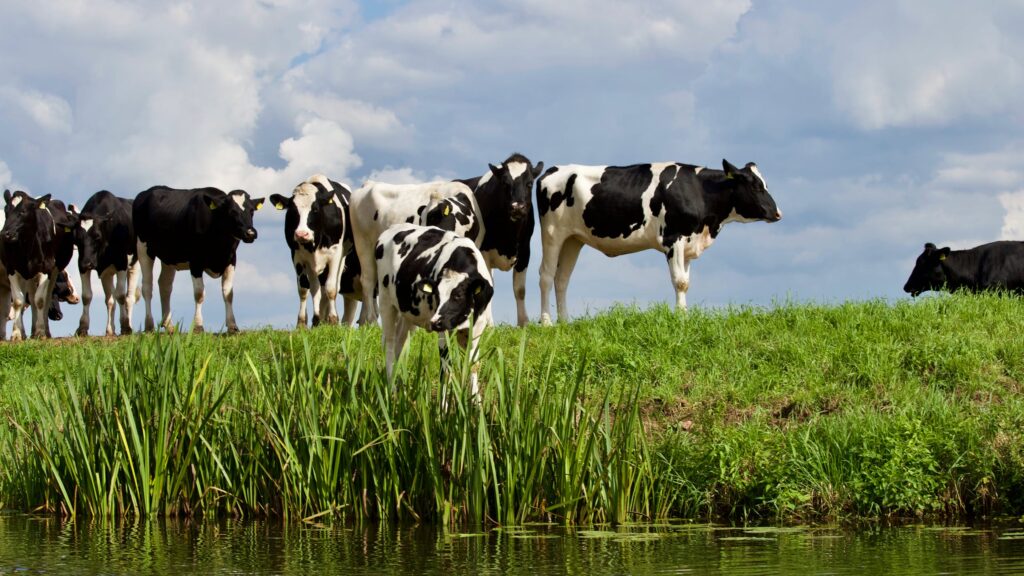
Bluetongue has been detected in a herd of cattle in Co Wexford, marking the first confirmed case of the disease in Ireland.
The Minister for Agriculture, Food and the Marine, Martin Heydon TD, confirmed the outbreak, saying the development was “unwelcome news but unfortunately it is not surprising, given the spread of this virus across Europe, Great Britain and recently Northern Ireland”.
“My Department has detected a bovine infected with bluetongue virus serotype 3 (BTV3) in a herd in Co Wexford,” the Minister said.
Bluetongue is spread by biting midges and cannot infect people. Minister Heydon stressed there is no risk to human health or food safety.
“Firstly, I want to emphasise that bluetongue cannot infect people and does not pose any food safety or human health issue,” he said. “This finding arose from the routine ongoing surveillance my Department has been carrying out, so that we can find the disease as early as possible. I want to express my sympathy to the affected farmer at this difficult time.”
Increased Department of Agriculture testing and surveillance for bluetongue has been underway since an outbreak in Northern Ireland in 2025. Four farms were confirmed positive in Northern Ireland before Christmas, with 52 cattle testing positive for the virus.
The Minister said investigations are ongoing, with additional sampling taking place to assess the situation.
“This virus predominantly is spread by midges. The replication of the virus in infected midges cannot happen when the daily temperatures are lower than 12 degrees Celsius,” he said. “The recent seasonal drop in temperatures means that infection is unlikely to spread widely at the current time. Investigations are ongoing with additional sampling taking place so that we can understand the epidemiological situation”.
Addressing potential trade impacts, Minister Heydon said exports of cattle and sheep will be affected.
“This outbreak will have an impact on exports of cattle and sheep, with additional costs and logistical issues required in order to comply with the rules set by the countries of destination,” he said.
However, he added that meat and dairy exports will not be affected.
“In respect of meat and dairy products, there are no implications for exports to the EU, UK and to most of our international markets,” he said. “My Department has been actively negotiating revisions to many trade certs for third countries so that the impact of any outbreak would be minimised, and that work will continue after this news”.
The Irish Farmers’ Association (IFA) described the confirmation of bluetongue in Wexford as “very disappointing” and called for heightened vigilance across the sector.
IFA President Francie Gorman said, “the case of Bluetongue in Co Wexford is very disappointing,” adding that “the highest level of vigilance is needed across the sector”.
He said that while investigations are ongoing, restrictions apply only to the affected farm.
“Critically, the IFA President said while investigations are ongoing, restrictions only apply on the farm in question. This means farmers can continue to market animals within the country while exercising the maximum level of vigilance.”
Mr Gorman said seasonal conditions could help limit the spread of the disease.
“The lower temperatures and reduced midge activity, which is the main disease vector at this time of year, does allow trade to continue and potentially eradicate this disease.”
He also said that while the Department of Agriculture has resolved some live trade issues, further work is needed.
“The Department of Agriculture has resolved some of the issues affecting the live trade, but must ensure all international trade certs are amended so animals from Ireland can continue to be exported to these countries.”
IFA Animal Health Chair David Hall warned of the consequences if the disease spreads further.
“At this time of year, vector activity is low which creates potential for the disease to be contained and eradicated,” he said. “Trade disruption and potential production losses on farms, would impact directly and solely on farmers, if the disease spreads.”
The IFA said it will engage directly with the Minister and his officials to ensure the impact of bluetongue and associated controls on farms is kept to a minimum.
Deputy Chair of the IFA, Wexford’s Alice Doyle, urged farmers to monitor their livestock closely.
She asked all farmers to check their livestock, cattle and sheep for signs and symptoms of bluetongue, and if they are concerned about an animal, to “contact a vet and DVO, as it’s very important to contain the virus”.
Last week, Deputy Chief Veterinary Officer Dr Eoin Ryan warned that Ireland was entering a high-risk period.
“It is everywhere else in northern and western Europe. It has reached Northern Ireland. It is on the coast of Wales, Cornwall and Lancashire. We are at risk,” he said.
Minister Heydon also confirmed that vaccination against BTV3 has been approved for use in Ireland from 2026.
“My decision last year to approve the use of BTV3 vaccines in Ireland from 2026 provides farmers with a valuable tool to protect cattle and sheep against the impact of BTV3, should it spread more widely in the 2026 vector season,” he said.
“I encourage cattle and sheep farmers to discuss with their private veterinary practitioner whether vaccination is appropriate for their circumstances.”
Pat Murray is the Wexford IFA Animal Health Chair, and speaking to South East Radio News, he gave the below reaction:
