

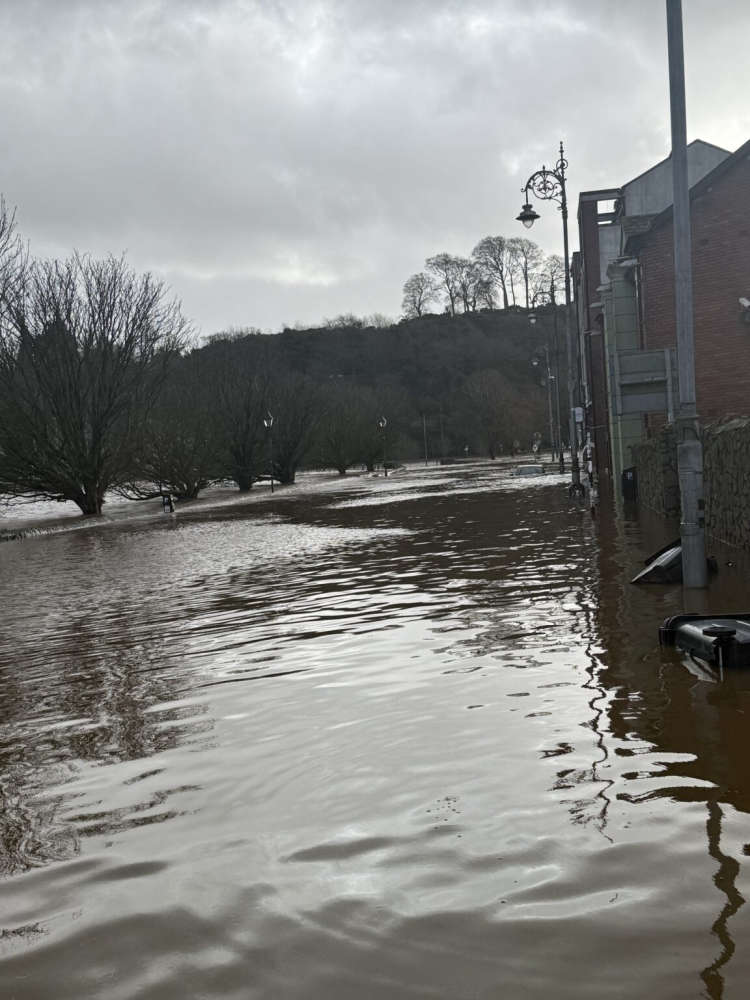
Following the recent rain and weather warnings and flooding and as we continue into a prolonged spell of wet weather, we would like to remind the public to take care of their safety during this period of unsettled weather.
Roads are still flooded in places, in places you might not ordinarily expect. This will have an impact on roads across the county as much of the spot flooding and pooling of surface water is caused by run-off from the land, which combined with full drainage systems, will take time to recover from this very sustained period of rainfall. High coastal levels will reduce the capacity for river discharge and increase flood risk in low-lying areas, especially at high tide.
High spring tides for the remainder of the week, combined with strong winds and surge, may cause wave overtopping and coastal flooding in places.
Some general advice for the public:
- Never enter floodwater.
It is dangerous and unpredictable and even shallow water can hide strong currents, debris, and open drains, the damage may be hidden. It can rise quickly, and levels can change rapidly, even after rain has stopped.
- Due to the extent of recent flooding, floodwaters in county Wexford should currently be classed as contaminated, including while they are receding. Avoid contact where possible, wear protective clothing during clean-ups, and wash hands thoroughly. Do not let children enter or play in or near affected areas.
- Always avoid fast-moving water.
Rapid or flowing water can knock an adult off their feet in seconds. Children and pets are especially vulnerable. Stay well clear of rivers, drains, and flooded roads.
- Do not drive into floodwater.
If the road is covered with flood water, turn around and find another way. Do not ignore road closure signs. 1 foot/ 30 cm of fast-moving water can sweep a car away. Many flood-related deaths occur in vehicles—turn around.
- Plan before you travel
Check road conditions for the length of your journey, before leaving home. Delays and closures are likely. If travel is not essential, stay home and off the roads during significant spot and river flooding events.
- If your home starts to flood.
If it is safe to do so and you cannot self – evacuate, householders should remain inside and move to higher ground within their home. Turn off electricity before water reaches power points or appliances. Do not touch electrical equipment if you are wet or standing in water.
- Prepare your household early if you can.
Move valuables to higher ground, secure loose items, and prepare an emergency kit with medications, important documents, food, water and a torch. Keep mobile phones charged. Check on neighbours who may need assistance.
- Follow official advice. Listen to official agencies, the council and emergency services for public safety messages.
- Visit https://www.met.ie/ for the most up to date weather information.
- The Irish Coast Guard advice remains: “Stay Back, Stay High, Stay Dry.”
- ESB Networks is highlighting the dangers posed by fallen live wires and is advising the public and the emergency services to stay away from these fallen cables and to report such cases to it immediately. ESB Emergency Services can be contacted at 1800 372 999. The public can monitor www.PowerCheck.ie. in regards to power restoration times.
- Uisce Éireann customers can check the website and social media channels for updates and to get in touch with any issues or concerns via their 24/7 customer care centre at 1800 278 278. The public can also sign up online to their free text alert system to get regular updates about their local supplies – see www.water.ie
- Please see link to the HSE flood advice guidance page. Flooding Advice for the General Public – Health Protection Surveillance Centre
 Not enough car spaces in New Ross for above-the-shop apartments
 Wexford Senator welcomes new tenancy rules beginning on March 1st
 South East Radio Celebrates Record Growth – Now Reaching 79,000 Adults Weekly
 Rise in Vape Shops, Charity Stores and Pop-Up Barbers Spark Concern



Comments
Add a comment