

One in five children in County Wexford was living in a household below the low-income threshold in 2022, according to figures supplied to South East Radio by the Central Statistics Office (CSO).
The figures, published this week as part of the CSO’s Characteristics of Children Living in Low-Income Households 2022 report, reveal significant differences across the county’s six Local Electoral Areas (LEAs).
In Wexford, 20% of children under the age of 18 who were living in private households with one or both parents fell below the low-income threshold.
That compares with a national figure of 16.1%, meaning the proportion in Wexford was almost four percentage points higher than the national average.
The county also recorded a substantially higher proportion than Dublin, where the figure stood at 12.2%, although it was below Donegal’s rate of 28.2%.
A breakdown supplied by the CSO reveals that Enniscorthy had the highest proportion of children living below the threshold, at 25.4% — the equivalent of approximately one in four children covered by the study.
New Ross recorded the second-highest proportion at 21.6%, followed by Gorey at 19.4%.
Both Rosslare and Wexford Local Electoral Areas recorded rates of 17.9%, while Kilmuckridge had the lowest proportion in the county at 16.2%.
Wexford Local Electoral Area Breakdown – 2022
|
Local Electoral Area |
Below Low-Income Threshold |
|
Enniscorthy |
25.4% |
|
New Ross |
21.6% |
|
Gorey |
19.4% |
|
Wexford |
17.9% |
|
Rosslare |
17.9% |
|
Kilmuckridge |
16.2% |
|
County Wexford overall |
20.0% |
|
National average |
16.1% |
The figures show a difference of 9.2 percentage points between Enniscorthy and Kilmuckridge, highlighting the variation in household income circumstances across different parts of County Wexford.
The Enniscorthy figure was also 9.3 percentage points above the national average.
What Does the Low-Income Threshold Mean?
The CSO defines the low-income threshold used in this study as an equivalised net administrative income below €16,271, representing 60% of the national median calculated from 2022 administrative data.
Equivalised income adjusts household income to account for differences in household size and composition, allowing comparisons between households with different numbers of adults and children.
The €16,271 figure should not be interpreted as a single income cut-off applying identically to every household, or as the total annual income of every family included in the research.
Rather, it is an adjusted income measure used for statistical comparison.
CSO Urges Caution in Interpreting Figures
In correspondence with South East Radio, the Central Statistics Office stressed that the research forms part of its Frontier Series of statistical publications.
This means the figures are based on developing statistical methods and administrative data that may not capture every source of household income.
The CSO has cautioned that care must be taken when interpreting the findings because methodologies may change and data sources may be incomplete.
The study also focuses specifically on children under 18 living in private households with one or both parents and therefore does not represent the circumstances of every child in Ireland.
Some forms of income are not fully captured by the underlying administrative data meaning income may be underestimated in certain households.
The figures should consequently be viewed as an important statistical indicator of low income rather than a definitive count of every child experiencing poverty.
National Findings Reveal Wider Challenges
The wider CSO research also examined how household circumstances were associated with children falling below the low-income threshold.
Nationally, 62.2% of children living in households with no working parent were below the threshold.
That figure fell to 24.3% in households with one working parent and 3.7% where two parents were working.
The national findings also showed higher proportions among children living in one-parent households.
Just over 30% of children of single mothers and 29.3% of children of single fathers were below the threshold, compared with 12.2% of children of married couples.
Housing circumstances also featured prominently. Nationally, 42.5% of children living in local-authority rented homes were below the threshold, compared with 7.9% of those living in owner-occupied homes with a mortgage.
These are national findings and should not be interpreted as a separate breakdown for County Wexford.
What Do the Figures Mean for Wexford?
While the figures relate to household circumstances in 2022, their publication provides a new opportunity to examine economic disadvantage among children across County Wexford.
The particularly high proportion recorded in Enniscorthy, alongside the above-average countywide figure, raises questions about the financial pressures facing families, inequalities between communities and the availability of targeted support.
The research does not establish whether the situation in Wexford has improved or worsened since 2022.
However, it provides a detailed geographical snapshot which could help inform local discussion about family income, employment, housing costs, childcare and supports for vulnerable children.
The full CSO report, Characteristics of Children Living in Low-Income Households 2022, was published on Monday, 19 October 2026.
 Wexford Schools Urged To Take Part In MS Readathon This November
 Eir To Switch Off 3G Network In County Wexford From Next Wednesday
 Shine A Light Goes Beyond the Footlights To Meet Some Of The people behind Wexford Festival Opera
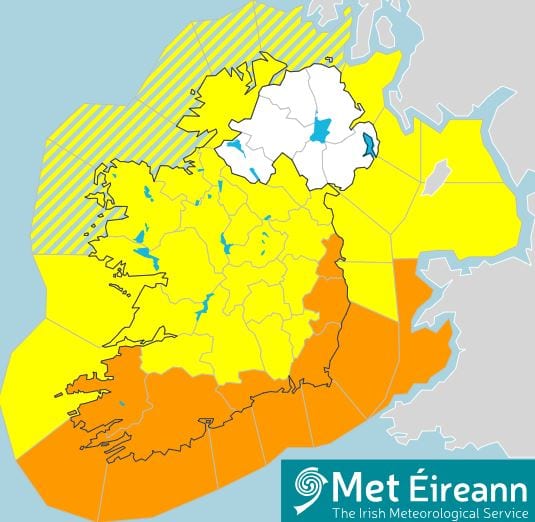 Wexford County Council preparing for Storm Austen



Comments
Add a comment